
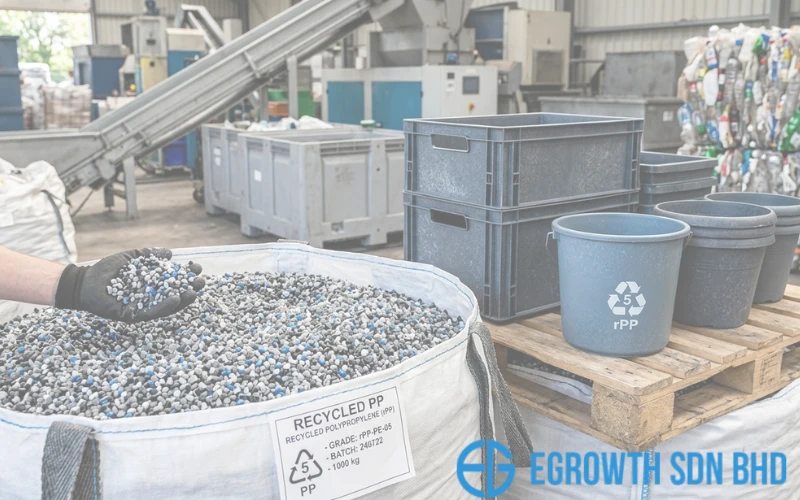
As a manufacturer seeking sustainable materials, recycled polypropylene offers a practical choice to lower costs, comply with environmental regulations, and attract customers who value eco-friendly products. This guide covers everything you need to know about purchasing recycled polypropylene, including how to select a reliable recycled polypropylene supplier and incorporate it into your production processes. Whether you produce packaging, automotive components, or consumer items, mastering recycled polypropylene can streamline your supply chain effectively.
Recycled polypropylene is a thermoplastic derived from processing post-consumer or post-industrial waste from everyday plastic items like containers and industrial scraps. It comes in forms such as pellets or sheets, retaining the durability, chemical resistance, and lightweight qualities of its virgin counterpart. Manufacturers transform this waste through sorting, cleaning, shredding, melting, and extruding into usable resin. Common types include post-consumer recycled polypropylene from household waste and post-industrial from factory scraps, with grades like homopolymer for stiffness or copolymer for better impact resistance.
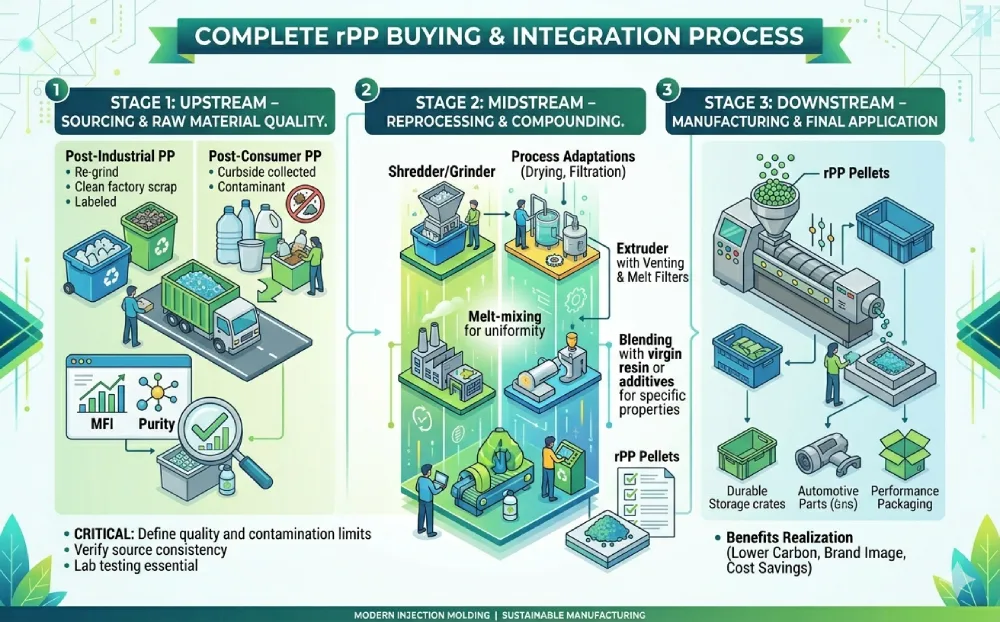
Switching to recycled polypropylene brings clear advantages for manufacturers. Environmentally, it reduces landfill waste, cuts energy use significantly compared to producing new material, and lowers overall carbon emissions while conserving natural resources. From a business perspective, it often costs less than virgin material, providing stability against price swings. Regulations in many regions now push for higher recycled content in products, and consumers increasingly favor sustainable brands, giving you a competitive edge. Performance-wise, high-quality recycled polypropylene delivers strength and flow properties close to virgin material, making it suitable for a wide range of applications without major adjustments.
The production process starts with collecting and sorting plastic waste to ensure high purity. The material is then shredded into flakes, thoroughly washed to remove contaminants, melted under controlled heat, filtered for impurities, and formed into uniform pellets. Quality checks verify key properties like flow rate, density, and strength. Reputable recycled polypropylene manufacturers emphasize transparency and customization, adding stabilizers or fillers to meet specific needs.
When evaluating recycled polypropylene, focus on essential qualities such as melt flow index for smooth processing, density for consistent part weights, tensile strength for durability, impact resistance for toughness, low contaminant levels to avoid defects, and uniform color for visual appeal. Look for certifications that confirm genuine recycled content and traceability from source to finished product.
Selecting the right recycled polypropylene supplier is critical to avoid quality issues or delays. Prioritize those with proven experience, large-scale operations, and proximity to your location to minimize shipping times and costs. Demand full supply chain transparency, including details on waste origins and processing methods. Request samples for in-house testing and customization options tailored to your equipment and standards. A good supplier provides certificates of analysis with each batch and supports trial runs to ensure compatibility.
Compared to virgin polypropylene, recycled versions offer a smaller environmental footprint and potential savings, though they may show slight variations in consistency due to source materials. Both process similarly in terms of temperature and machinery, but recycled material might require extra drying to handle minor moisture content. With proper sourcing, these differences become negligible, allowing seamless integration.
Follow this buying process to get started. First, assess your material needs based on production volume and application requirements. Research potential suppliers through industry directories and request quotes with detailed specifications. Test samples in your machinery to check for issues like shrinkage or surface defects. Negotiate terms for minimum orders, payment schedules, and long-term pricing stability. Begin with a small trial production run before committing to larger volumes, and secure contracts that include quality guarantees.
Recycled polypropylene excels in diverse manufacturing applications, from rigid packaging and protective crates to automotive interiors and exterior parts, as well as furniture, toys, and textiles. It works well in blends with virgin material to optimize properties, and many industries now require it to meet sustainability goals without sacrificing performance.
Challenges like quality variability can arise from inconsistent waste streams, but choosing suppliers with rigorous sorting and testing overcomes this. Supply shortages may occur seasonally, so diversify sources and maintain buffer stock. Processing hurdles, such as minor odors or specks, resolve with pre-drying, fine filters, and additives. Ensure compliance with food-contact or safety standards by verifying approvals for heavy metals and other impurities.
Processing recycled polypropylene mirrors virgin material closely. For injection molding, use barrel temperatures around the standard range and appropriate mold settings. Extrusion benefits from controlled screw speeds and long barrel designs. Blow molding handles parison formation similarly, with attention to swell control. Regular monitoring prevents common issues like gels or uneven flow.
The market for recycled polypropylene is expanding rapidly, driven by better sorting technologies like automated systems for near-perfect purity. Emerging methods like chemical recycling promise even higher quality, resembling virgin material closely. Demand continues to grow across sectors, with blends incorporating bio-based elements for enhanced circularity.
To take action, audit your current polypropylene usage, reach out to potential recycled polypropylene suppliers for samples, conduct a pilot test soon, and aim to incorporate a portion into your mix within the next few months. This shift typically delivers returns through cost reductions and market advantages in under a year.
Partnering with a dependable recycled polypropylene supplier or manufacturer positions your operations for sustainability and efficiency. By focusing on quality specs, transparent sourcing, and practical testing, you can confidently integrate this material and build a more resilient supply chain.
