
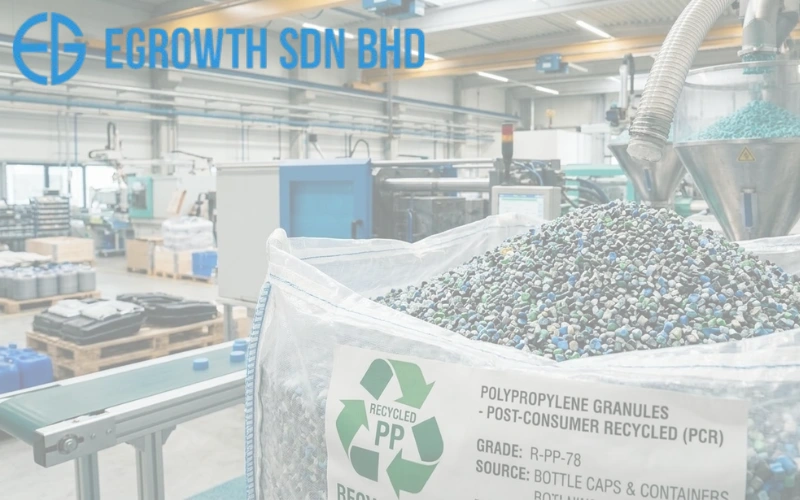
In the fast-paced world of modern manufacturing, businesses are constantly seeking ways to cut costs without compromising on quality or sustainability. Enter recycled polypropylene granules a game-changing material derived from post-consumer and post-industrial waste. Polypropylene (PP), a versatile thermoplastic polymer, is one of the most widely used plastics globally, found in everything from packaging to automotive parts. Recycling it into granules transforms waste into a valuable resource, offering manufacturers a cost-effective alternative to virgin PP.
Recycled PP granules are produced by collecting used PP products, sorting them, shredding them into flakes, cleaning, melting, and extruding them into uniform pellets. This process not only diverts plastic waste from landfills but also slashes production expenses. With raw material costs accounting for up to 60-70% of manufacturing budgets in plastic-intensive industries, switching to recycled granules can yield savings of 20-40% per ton compared to virgin materials. As global supply chains grapple with volatile petrochemical prices, these granules emerge as a smart, resilient choice for forward-thinking manufacturers.
The Economic Advantages: Why Recycled PP is a Budget-Saver
Cost-effectiveness is the cornerstone of recycled polypropylene granules’ appeal. Virgin PP prices fluctuate wildly due to oil price swings, geopolitical tensions, and supply disruptions, In contrast, recycled PP granules often retail at $800-$1,100 per ton, depending on purity and grade. This gap stems from the lower energy and feedstock costs in recycling; producing recycled PP consumes about 80% less energy than virgin production, translating to direct savings passed on to buyers.
Beyond upfront costs, long-term economics shine brighter. Manufacturers using recycled granules benefit from stable pricing, as recycled supply chains rely less on fossil fuels. A mid-sized injection molding firm, for instance, could save $50,000-$100,000 annually by substituting 50% of its virgin PP with recycled granules in producing consumer goods like storage bins or bottle caps. Case studies from European manufacturers, such as those in Germany’s plastics cluster, report payback periods under six months for recycling integration.
Moreover, government incentives amplify these savings. In the EU, the Circular Economy Action Plan offers tax breaks and subsidies for recycled content usage, while the U.S. Inflation Reduction Act provides credits for sustainable manufacturing. These policies make recycled PP not just cheaper but strategically advantageous, shielding businesses from carbon taxes and import tariffs on virgin plastics.
Environmental Benefits: Sustainability Meets Profitability
While cost drives adoption, the environmental upside seals the deal. Polypropylene recycling reduces greenhouse gas emissions by up to 1.5-2 tons of CO2 per ton of material compared to virgin production, per lifecycle assessments from the Ellen MacArthur Foundation. Landfill diversion is equally impressive: one ton of recycled PP granules prevents 1.5 tons of waste, conserving precious space and curbing methane emissions.
Water and resource conservation add to the tally. Recycling PP uses 90% less water and requires no new petroleum extraction, easing pressure on depleting reserves. For manufacturers, this translates to enhanced brand reputation and compliance with regulations like the EU’s Single-Use Plastics Directive or California’s SB 54 plastic waste laws. Companies like Unilever and Procter & Gamble have publicly committed to 25-50% recycled content in packaging by 2025, driving demand and stabilizing recycled PP markets.
Biodiversity protection is another hidden gem. By reducing plastic pollution in oceans where PP makes up 15-20% of marine debris recycled granules support global initiatives like the UN’s Clean Seas campaign. Manufacturers adopting them position themselves as eco-leaders, attracting eco-conscious consumers and investors. A 2023 Nielsen report found 78% of global consumers prefer sustainable brands, boosting sales for products made with recycled materials.
Quality and Performance: Matching Virgin PP Standards
Skeptics might question if recycled PP granules compromise performance. Modern recycling technologies dispel this myth. Advanced sorting via near-infrared spectroscopy and AI-driven optical systems ensure high purity (95-99%), minimizing contaminants like PVC or PE that could degrade properties.
Recycled PP granules boast mechanical properties rivaling virgin material: tensile strength of 30-40 MPa, impact resistance via Izod testing up to 3-5 kJ/m², and melt flow rates (MFR) customizable from 2-50 g/10 min for diverse applications. Additives like stabilizers and compatibilizers enhance UV resistance, thermal stability (up to 140°C service temperature), and processability.
Real-world testing validates this. A study by the American Chemistry Council showed recycled PP in automotive bumpers enduring 10,000 flex cycles without failure, matching virgin benchmarks. Food-grade recycled PP, approved under FDA and EFSA standards after rigorous decontamination (e.g., via supercritical CO2 extraction), ensures safety for containers and crates. Grades like rPP-H (homopolymer) for rigid packaging or rPP-R (random copolymer) for transparent films offer tailored solutions, proving recycled granules aren’t a downgrade they’re an upgrade for savvy manufacturers.
Applications Across Industries: Versatile and Scalable
Recycled polypropylene granules’ adaptability spans sectors, amplifying their cost-effectiveness.
Packaging: The largest user, accounting for 40% of PP demand. Recycled granules produce bottles, tubs, and films with 30-100% recycled content, cutting costs in high-volume runs. Brands like Coca-Cola use rPP for caps, reducing material expenses by 25%.
Automotive: Lightweighting drives adoption; rPP in interiors, under-hoods, and battery trays shaves 10-15% off part weights, improving fuel efficiency. Ford’s use in door panels exemplifies scalability, with annual savings in the millions.
Consumer Goods: From furniture to toys, rPP enables durable, affordable products. IKEA’s recycled plastic chairs demonstrate aesthetic and functional parity.
Construction and Textiles: Woven geotextiles and non-wovens from rPP bolster infrastructure while slashing geotextile costs by 30%. In textiles, rPP yarns for carpets and ropes offer flame-retardant options.
Agriculture: Mulch films and crates from recycled granules extend product life in harsh conditions, supporting circular farming.
This versatility scales from small injection molders to mega-factories, with pellet sizes (2-4mm) ensuring seamless integration into existing extruders and molds.
Challenges and Solutions: Navigating the Roadblocks
No material is perfect. Supply chain inconsistencies, color variability, and regulatory hurdles pose challenges. Fluctuating post-consumer feedstock can affect consistency, but certified suppliers using ISCC PLUS standards mitigate this via traceability.
Color sorting via electrostatic tech resolves aesthetic issues for visible applications. Odor from prior use? Advanced devolatilization removes volatiles, achieving food-contact neutrality.
Investment in machinery upgrading to twin-screw extruders for better melt homogeneity pays off quickly. Partnerships with recyclers like Plastipak or Veolia provide turnkey solutions, including custom compounding.
Future Outlook: A Growing Market Imperative
The recycled PP market is exploding, projected to reach $15 billion by 2030 (CAGR 8-10%), per Grand View Research. Innovations like chemical recycling (pyrolysis to monomers) promise infinite recyclability, while blockchain tracking ensures transparency.
Policy tailwinds China’s plastic waste import ban, India’s Extended Producer Responsibility fuel demand. Manufacturers ignoring this risk obsolescence; adopters gain competitive edges in pricing, compliance, and innovation.
Embrace the Smart Choice Today
Recycled polypropylene granules aren’t just a cost-cutter they’re a strategic powerhouse blending economics, ecology, and excellence. By delivering 20-40% savings, top-tier performance, and sustainability credentials, they empower manufacturers to thrive amid rising costs and green mandates. Transitioning requires minimal disruption: source from reputable suppliers, test in pilot runs, and scale. The result? Leaner operations, happier stakeholders, and a healthier planet. In an era demanding efficiency and responsibility, recycled PP granules stand as the unequivocal smart choice for cost-effective manufacturing.
