
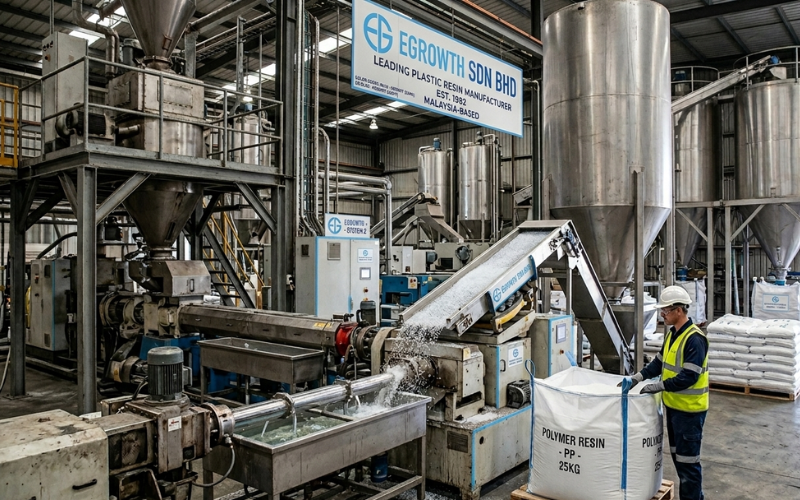
A purchase order for several tonnes of resin looks straightforward on paper until the container arrives and the material behaves nothing like the sample that was approved weeks earlier. That gap between what was promised and what actually shows up at the dock is almost always traceable to questions that never got asked during the sourcing conversation.
This piece runs through exactly what to ask before committing to a large order, why each question matters, and how the answers separate a dependable plastic resin manufacturer from one that’s simply good at sales calls.
None of these questions require an engineering background to ask or understand. They’re the kind of practical, specific checks any procurement team can run through on a single call, and the answers tend to reveal far more about a supplier’s reliability than a polished brochure ever will.
Start With the Manufacturer’s Actual Production Setup
Are They Manufacturing or Reselling?
Plenty of companies marketing themselves online as a plastic raw material manufacturer are, in practice, intermediaries buying from someone else’s production line and adding a margin. That’s not automatically a problem, but it changes who’s accountable when a batch doesn’t meet spec, and it usually means less control over consistency between orders.
Asking directly which plant produces the resin, and whether a facility visit or virtual tour is possible, tends to get an honest answer fast. A genuine industrial plastic resin supplier won’t hesitate to share this information.
It also helps to ask how long they’ve worked with their own raw material suppliers, since a manufacturer juggling several upstream sources to fill a single order is more likely to produce inconsistent batches than one with a stable, long-term feedstock relationship.
What Is Their Monthly Production Capacity?
Capacity questions matter more than buyers usually expect. A manufacturer running near their ceiling on existing contracts may quote a fast delivery time that quietly slips once your order competes for production slots with other clients.
Knowing their typical capacity versus current order book gives a realistic sense of whether your bulk order timeline is achievable or optimistic.
Get Specific About Material Quality
What Grade and Specification Does the Resin Meet?
Generic answers like “industrial grade” or “premium quality” mean very little without numbers attached. A reliable plastic polymer manufacturer should be able to provide a technical data sheet covering melt flow index, density, tensile strength, and impact resistance specific to the grade being quoted.
Beyond the data sheet itself, ask whether the figures listed are typical averages or guaranteed minimums and maximums. Averages can mask wide swings between batches, while guaranteed ranges give a buyer something concrete to hold the manufacturer to if a delivered batch falls outside spec.
Is the Resin Virgin, Recycled, or Blended?
This single question prevents a huge number of disputes down the line. Some buyers are perfectly happy with a recycled or blended resin at a lower price point, but only if they know that’s what they’re getting and have priced their own process around it.
A plastic granules manufacturer working with reprocessed material isn’t doing anything wrong by offering it, but failing to disclose the blend ratio upfront is where trust breaks down later.
Can They Provide Batch Test Reports?
Every batch of resin should come with its own quality test report, not a generic specification sheet reused across multiple shipments. Ask whether reports include actual test data for the batch being shipped, or whether they’re a standard document attached to every order regardless of which batch it covers.
Understand Their Quality Control Process
What Certifications Does the Facility Hold?
ISO 9001 certification indicates a documented quality management system is in place, which matters more for consistency across multiple orders than for any single shipment. For resin destined for food-contact or medical applications, ask specifically about additional compliance like FDA or food-grade certification rather than assuming general ISO certification covers it.
How Do They Handle Contamination and Batch Variation?
Raw material inconsistency is one of the most common complaints buyers have about resin sourcing, particularly when working with a less established plastic raw material manufacturer. Ask what steps are taken between batches to maintain consistent melt flow and colour, and what their rejection or rework process looks like when a batch fails internal testing.
A manufacturer with a clear answer here, rather than a vague reassurance, is demonstrating an actual process rather than hoping nothing goes wrong.
It’s also worth asking how colour matching is handled across batches, particularly for resin going into visible end products. Slight shade variation between deliveries is one of the most common downstream complaints, and a manufacturer who proactively explains their colour consistency checks is usually one who has dealt with this issue before and built a real solution around it.
Will They Accept a Pre-Shipment Inspection?
Independent inspection before the container is sealed is standard practice in bulk material trade for a reason. Any industrial plastic resin supplier resistant to a third-party check, particularly for a first-time buyer, is signalling something worth taking seriously before placing a large order.
Clarify Commercial Terms Before You Commit
What Is Their MOQ, and Is It Negotiable?
Minimum order quantities vary widely between manufacturers and often depend on the specific resin grade rather than being a fixed company-wide number. Asking whether the MOQ can be met by combining multiple grades or colours within a single order avoids tying up cash in stock you don’t immediately need.
What Payment Terms Do They Offer New Buyers?
First orders from an unfamiliar plastic polymer manufacturer typically come with less favourable payment terms than an established relationship, and that’s reasonable from their side too. Understanding upfront whether they expect full payment, a deposit against a letter of credit, or something else avoids a late surprise during contract negotiation.
How Do They Handle Price Fluctuation Mid-Contract?
Resin pricing tracks crude oil and naphtha costs closely, and a long-term contract needs a clear mechanism for handling that volatility. Ask whether pricing is locked for the contract duration, reviewed monthly, or tied to a published index, since vague answers here tend to surface as disputes later.
It’s also reasonable to ask how much notice they provide before a price revision takes effect. A manufacturer who builds in even a short notice period before passing on cost increases is generally easier to plan production budgets around than one who applies changes with immediate effect.
Ask About Logistics and After-Sales Support
What Happens If a Shipment Doesn’t Meet Specification?
This is the question many buyers skip until it’s too late. A plastic granules manufacturer confident in their process will have a clear, pre-agreed procedure for rejected batches, whether that’s replacement, credit, or a partial refund, rather than leaving it to be negotiated after the fact.
Can They Support Repeat Orders at Consistent Quality?
A single good batch doesn’t prove reliability. Ask for references from buyers who’ve placed multiple orders over an extended period, since consistency across repeat purchases is the real test of whether a plastic raw material manufacturer can be trusted as a long-term supplier rather than a one-off transaction.
What Lead Time Should Be Expected for Future Orders?
First orders sometimes get prioritised to win the business, while later orders settle into a manufacturer’s normal queue. Clarifying expected lead time for repeat orders, not just the first one, sets realistic expectations for production planning on your end.
This is particularly relevant for buyers running just-in-time manufacturing, where a two-week delay on a resin shipment can stall an entire production line. Building a buffer stock policy with the manufacturer, even an informal one, protects against the gap between their quoted lead time and what actually happens once they’re juggling multiple client deadlines.
Treat the First Order as a Test, Not Just a Transaction
None of these questions are meant to create friction with a manufacturer worth working with. A dependable plastic resin manufacturer expects this level of scrutiny from a new buyer and typically has answers ready before being asked.
The smarter approach for a first bulk order is requesting a smaller trial quantity before committing to a full container load, paired with independent testing on arrival. That trial run, more than any sales conversation or certificate, shows whether the relationship is worth scaling into a long-term sourcing arrangement.
Approach the first conversation with a manufacturer the same way they’re likely approaching it with you, as the start of a relationship rather than a single transaction to close. The suppliers worth keeping are the ones who answer these questions plainly, without getting defensive, and who treat a new buyer’s caution as reasonable rather than inconvenient.
