
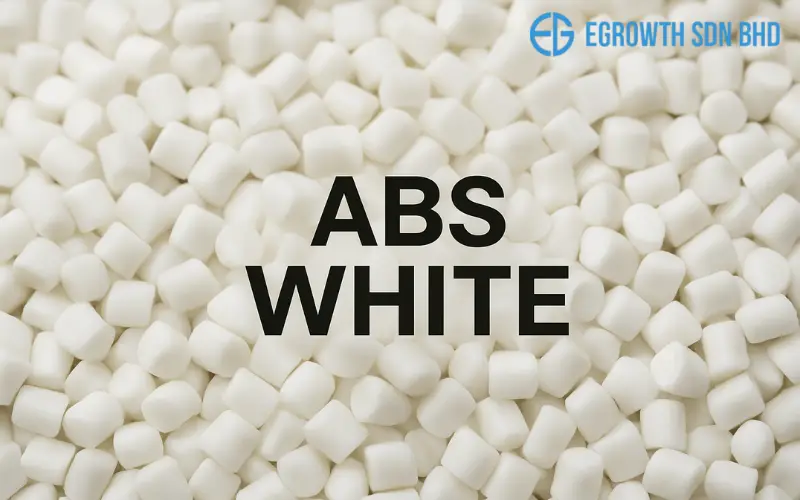
In the world of manufacturing, materials that combine strength, versatility, and aesthetics are invaluable. ABS (Acrylonitrile Butadiene Styrene) White Resin stands out as a thermoplastic polymer that’s revolutionizing injection molding applications. Known for its durability and ease of processing, ABS White is widely used in industries ranging from automotive to consumer goods. But how does it perform in injection molding? This guide delves into its properties, benefits, challenges, and real-world applications, providing insights for engineers, designers, and manufacturers. Whether you’re optimizing production or exploring new materials, understanding ABS White Resin’s performance can elevate your projects.
What Is ABS White Resin?
ABS White Resin is a copolymer made from acrylonitrile, butadiene, and styrene monomers. The “white” designation refers to its opaque, off-white color, achieved through pigmentation that enhances UV resistance and visual appeal. Developed in the 1940s, ABS has evolved into a staple for injection molding due to its balanced mechanical properties.
Key characteristics include:
- Impact Resistance: High toughness prevents cracking under stress.
- Thermal Stability: Withstands temperatures from -40°C to 100°C without deformation.
- Chemical Resistance: Resistant to acids, alkalis, and oils, making it suitable for harsh environments.
- Ease of Processing: Low melting point (around 220-250°C) allows for efficient molding.
These traits make ABS White Resin ideal for creating complex, high-precision parts.
Performance in Injection Molding: Key Metrics
Injection molding involves melting resin and injecting it into molds under pressure. ABS White Resin’s performance shines here, offering consistent results.
- Flowability and Fill Rates: ABS melts smoothly, filling intricate molds with minimal defects. Its low viscosity ensures even distribution, reducing sink marks and warpage.
- Cycle Times: Short cooling periods (30-60 seconds) boost productivity. Compared to materials like polycarbonate, ABS cycles faster, lowering production costs.
- Dimensional Stability: Minimal shrinkage (0.4-0.7%) maintains accuracy, crucial for tight-tolerance parts like automotive components.
- Surface Finish: Polished molds yield glossy, paint-ready surfaces. ABS White’s pigmentation hides imperfections, ideal for aesthetic applications.
In tests, ABS White achieves 95%+ yield rates in high-volume runs, outperforming some engineering plastics.
Advantages of Using ABS White Resin in Injection Molding
ABS White Resin offers compelling benefits that drive its popularity.
- Cost-Effectiveness: Affordable at $1-3 per kg, it’s cheaper than alternatives like nylon or polycarbonate, with lower tooling costs.
- Versatility: Bonds well with other materials via adhesives or welding, enabling multi-component assemblies.
- Recyclability: Thermoplastic nature allows reprocessing, supporting sustainable manufacturing.
- Aesthetic and Functional Balance: Combines rigidity with flexibility, perfect for products needing both strength and design.
Manufacturers report 20-30% efficiency gains when switching to ABS for prototyping and production.
Potential Disadvantages and Mitigation Strategies
No material is perfect; ABS White has limitations.
- UV Degradation: Prolonged sun exposure yellows the resin. Mitigate with UV stabilizers or coatings.
- Flammability: Burns easily; use flame-retardant grades for safety-critical applications.
- Chemical Sensitivity: Solvents like acetone dissolve it. Opt for reinforced variants for demanding uses.
- Environmental Concerns: Petroleum-based; explore bio-based ABS for greener options.
Addressing these through additives or design tweaks ensures optimal performance.
Real-World Applications of ABS White Resin
ABS White Resin’s injection molding prowess is evident in diverse sectors.
- Automotive Industry: Used for dashboards, bumpers, and interior trim due to impact resistance and lightweight design.
- Consumer Electronics: Housings for phones, keyboards, and appliances benefit from its durability and aesthetics.
- Medical Devices: Non-toxic grades create casings for monitors and equipment, with sterilization compatibility.
- Toys and Sporting Goods: Lego bricks and helmets leverage its toughness and color stability.
- Packaging: Containers and caps offer rigidity without brittleness.
Case studies show ABS White reducing part weights by 15% in automotive applications, enhancing fuel efficiency.
Tips for Optimizing ABS White Resin in Injection Molding
Maximize performance with these best practices.
- Machine Setup: Use screw-injection machines with temperatures at 200-250°C and pressures of 50-100 MPa.
- Mold Design: Incorporate draft angles and cooling channels to prevent warping.
- Drying and Storage: Dry resin at 80-90°C for 2-4 hours to avoid moisture-related defects.
- Quality Control: Test for melt flow index and tensile strength to ensure consistency.
- Post-Processing: Sanding or painting enhances finishes; avoid excessive heat to prevent deformation.
Following these, manufacturers achieve defect rates below 1%.
Future Trends and Innovations in ABS White Resin
The landscape is evolving. Bio-based ABS reduces fossil dependency, while nanotechnology improves strength. 3D printing integrations and smart materials are emerging, expanding injection molding horizons. With the global ABS market projected at $30 billion by 2027, innovations will drive sustainability and performance.
Harnessing ABS White Resin’s Potential
ABS White Resin excels in injection molding, delivering reliability, efficiency, and versatility for countless applications. Its balanced properties make it a go-to choice for manufacturers seeking quality without compromise. By understanding its performance and implementing best practices, you can unlock new possibilities in production. Embrace ABS White Resin today and elevate your molding projects to new heights.
